Many properties stay in the same family or remain unchanged for generations. Owners often assume that because nothing has been sold or divided, the boundaries and details are clear and correct. Over time, however, records fade, markers disappear, and descriptions written long ago can become hard to understand. Land surveying provides the careful work needed to confirm what is truly there. It turns old, uncertain information into clear, verified facts that protect the property and its owners well into the future.
Why Long-Established Parcels Often Require Modern Property Verification
Even if a property has not changed hands in decades, small shifts and losses can create confusion. Early records may have used simple measurements or landmarks that no longer exist. Fences, trees, streams, or stone piles that once marked lines may have moved, rotted, or been removed. Paper documents can also become damaged, incomplete, or written in language that does not match today’s standards.
These uncertainties may not cause problems right away, but they can surface when you least expect them. A neighbor may build a new structure, local officials may update zoning rules, or a future owner may ask for proof of exact limits. Without clear verification, what seemed like a simple, stable property can become a source of stress and disagreement.
Modern land surveying resolves these hidden questions. It does not guess or rely on memory. Instead, it uses proven methods to confirm where boundaries sit and what the legal description means in real terms. This work gives owners peace of mind and removes doubt that could grow into larger issues later.
Locating Historic Survey Evidence That Supports Property Identification
To confirm the true limits of an older parcel, surveyors look for proof that links past records to today’s land. They do not start from scratch. Instead, they search for physical and written clues that show where lines were originally set. This process often includes checking:
- Old iron pins, stone markers, or concrete monuments placed during earlier surveys
- Remnants of original fences, ditches, or tree lines that once marked divisions
- Historical maps, tax records, and previous survey reports stored in local offices
- Reference points that connect the property to larger official control networks
Finding these pieces of evidence takes time and skill. When they are located and measured, they act as a solid bridge between the past and the present. They show that the property being reviewed is the same one described in old deeds, and they help confirm that boundaries have not been lost or altered over time.
Comparing Legacy Deed Descriptions With Current Field Conditions
Many older legal descriptions use terms and methods that differ from those used today. They may describe lines as “running from the large oak tree to the bend in the creek” or give measurements in units that are no longer common. Over time, natural changes can make these descriptions hard to follow. The tree may have fallen, the creek may have shifted course, or the distance given may not match what is measured now.
Land surveying takes these written descriptions and tests them against what exists on the ground. Surveyors measure from known points and compare the results to the original wording. If there are differences, they analyze why they happened and determine which interpretation fits legal rules and long-standing use.
This work does not rewrite history. It clarifies it. It explains whether the difference comes from a natural change, an old measurement error, or a shift in how the land was used. The result is a clear understanding of what the deed means today, so everyone involved sees the property the same way.
Supporting Family Property Transfers Across Multiple Generations
When land passes from parents to children or between other family members, it is often done with trust and little formal review. This works well for a time, but it can leave gaps in information. Over the years, stories about where lines lie may change slightly, or details may be forgotten. When the next generation plans to build, sell, or divide the land, these gaps can cause delays or disagreements.
An updated land survey clears up these questions before any transfer takes place. It confirms the exact size and shape of the parcel, notes any changes that have occurred, and verifies that no part of the property has been lost or gained without record. This information becomes part of the transfer documents, so the new owners receive a complete and accurate picture of what they are receiving.
It also protects family relationships. Clear facts remove the chance of arguments that can arise when boundaries are unclear. Everyone knows exactly what belongs to whom, and the property can move forward with its full value and rights intact.
Creating Reliable Documentation for Future Property Recordkeeping
One of the most valuable results of verifying an older parcel is the creation of new, dependable records. Once measurements are complete and boundaries are confirmed, the surveyor produces a report and map that follows current standards. These documents are clear, detailed, and easy to understand for anyone who works with the property later.
This new record serves as a fixed point for all future activity. If the property is sold, mortgaged, or reviewed by local officials, the latest survey provides the proof needed. It also reduces the work required for the next generation. Instead of starting over with old, confusing papers, future owners can compare their own measurements to the verified baseline.
In this way, land surveying does more than solve today’s questions. It builds a strong foundation that will keep the property clearly defined and well-documented for many years to come.
Frequently Asked Questions
Why should long-held properties be surveyed if ownership has not changed?
Even without changes in ownership, boundaries and records can become unclear over time. Old markers may disappear, descriptions may become hard to follow, and natural changes can alter the land. A survey confirms the true limits and prevents problems from arising later.
What types of historical evidence do surveyors use during property verification?
They look for physical markers like pins, stones, or old fences, as well as written records such as earlier surveys, deeds, maps, and tax documents. These pieces of information help link modern measurements to the original definition of the property.
Can older deed descriptions create challenges during property reviews?
Yes. Many old descriptions rely on landmarks or units of measurement that no longer exist or are no longer used. Land surveying compares these descriptions to current conditions to find the correct and legal way to define the boundaries today.
How does land surveying help with inherited property transfers?
It provides clear proof of the property’s size, shape, and boundaries. This removes uncertainty, ensures everyone involved understands what is being transferred, and reduces the risk of disputes among family members or future owners.
Why is updated survey documentation valuable for future recordkeeping?
It creates a clear, accurate, and easy-to-use reference that meets current standards. It makes future sales, loans, or reviews faster and simpler, and it preserves the property’s true status for the next generation of owners.

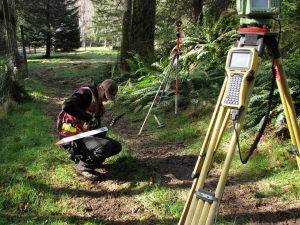 Land Surveyors are professionals who txke precise measurements to determine the size and boundaries of a piece of real estate. While this is a simplistic definition, boundary surveying is one of the most common types of surveying related to home and land owners. If you fall into the following categories, please click on the appropriate link for more information on that subject: